


Home
>
Old West Iron Blog: Craftsmanship, Heritage & Hand-Forged Expertise
>
From Function to Finish: The Evolution of Nail Heads in Architecture

From Function to Finish: The Evolution of Nail Heads in Architecture
by Maddison Mellem on Jul 28, 2025Once purely utilitarian, nail heads have quietly played a foundational role in architecture for centuries. What began as a humble fastening method has evolved into a distinctive design detail—especially in rustic, Spanish, and Old World styles. Today, antique iron nails and decorative clavos hardware are appreciated not just for what they hold together, but for the bold character they bring to a space.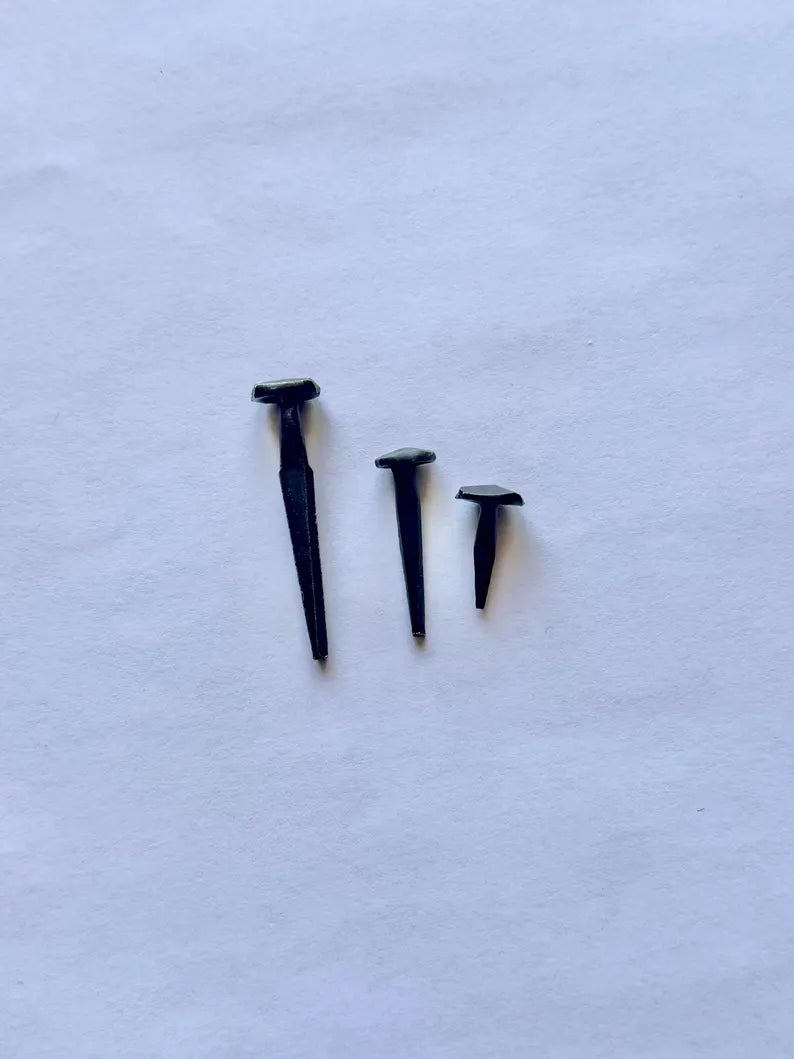
The Humble Origins of Nail Heads
In early architecture, nail heads were made by hand—typically forged from iron and shaped individually by blacksmiths. These early fasteners were thick, strong, and often square or wedge-shaped, with wide heads to better grip wood surfaces. Their exposed heads were a visible sign of solid craftsmanship.
Nail heads weren't always meant to be seen, but due to necessity and limited tooling, they were often left exposed. Over time, those little details became iconic in cabins, barns, mission-style homes, and colonial buildings.
From Structural Necessity to Decorative Statement
As construction materials modernized and fasteners became smaller or concealed, the exposed nail head began to take on a new role—not as a requirement, but as a design choice.
In Western, Mediterranean, and Spanish Revival architecture, decorative clavos hardware became an intentional element. These iron studs mimic the look of old iron nails but are used purely for decoration—often arranged in symmetrical patterns on doors, gates, furniture, and even beams.
They offer both texture and heritage. Whether hammered by hand or cast with aged finishes, clavos give the impression of old-world authenticity and rugged craftsmanship.
Antique Iron Nails in Modern Design
Today, the use of antique iron nails and clavos has expanded beyond historical restorations. Designers and DIYers alike use these decorative nail heads to add depth and storytelling to everything from cabinetry to front doors.
Clavos are available in a wide range of finishes and shapes—round, pyramid, hammered, rosette—allowing them to complement any rustic or architectural style. And while they may no longer hold a structure together, they certainly help tie a look together.
👉 Explore our full collection of decorative clavos nail heads to add history, texture, and craftsmanship to your next project.